
Medical institutions in Japan are divided widely into clinics and hospitals.
General Hospitals and Clinics in Japan
Clinics may be managed by a single doctor and provide only one specialization or may have multiple doctors with different specializations.

Image credit: Canva
Hospitals are larger institutions that generally have a wide variety of medical departments, interact with emergencies, and have in-patient services. Formally, a medical facility with less than 20 beds is a clinic.
The Main Differences Between Hospitals and Clinics in Japan
The simplest way to differentiate between these two different types of medical facilities is the size and severity of your illness.
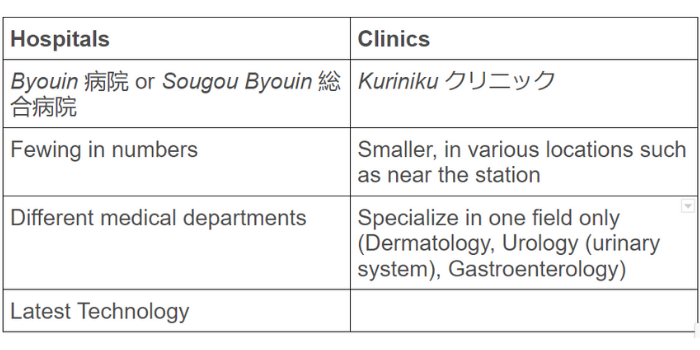
Due to the limited size of the facility (usually 20 beds or less) patients with mild or chronic disease and injuries will receive medical care at clinics. Most clinics specialize in the treatment of specific symptoms, such as internal medicine (naika, 内科) or OB-GYN (san-fujinka). Thus, patients must then determine which clinic to visit.
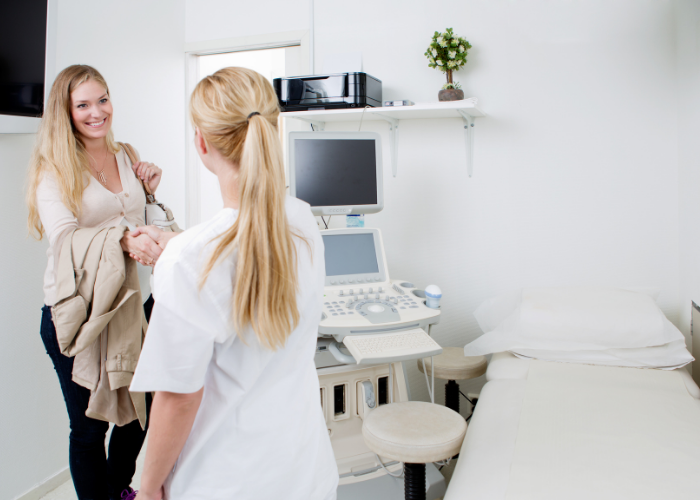
Image credit: Canva
On the other hand, there are three major types of hospitals in Japan: national, general, and university hospitals. These institutions also provide specialized examinations and run operations. Some patients are moved from a clinic to a hospital with a referral letter, depending on the severity of their symptoms.
Where Should You Go? Hospital or Clinic?

Although most clinics do not require appointments, some do, so it is best to confirm in advance. For instance, many clinics have a special number for appointments (hospital also), and some even have an online appointment form. In general, dentists are appointment-only. When you visit a meeting-only facility for the first time, you can call to describe the situation and clarify the symptoms and availability.
If the condition is more serious or an emergency, you should head directly to a larger hospital. However, if you have a cold or other mild symptoms, it is recommended to visit a clinic instead. Larger hospitals usually charge an additional fee for patients with non-serious conditions.

Image credit: Canva
If a clinic cannot treat your condition, you will be referred to another hospital. Referral letters vary depending on the clinic or hospital, and a referral fee of about 750-2,000 yen may apply. This fee may also be charged when seeking a second opinion at another clinic. If you visit a large hospital without a referral letter for a non-emergency condition, you will be charged a significant first-time consultation fee. According to JapanHealthcare Info, since April 2016, this fee has been around 5000 yen, with subsequent visits costing 2500 yen.
Hospitals and Clinics in Japan
If the condition is more serious or an emergency, you should head directly to a larger hospital. However, if you have a cold or other mild symptoms, you should refrain from going to a larger hospital!
The Guidable team does hope that you found this article a helpful piece of information! After all, all of our activities are aiming for a better life for foreigners in Japan! So, stay tuned and follow us!