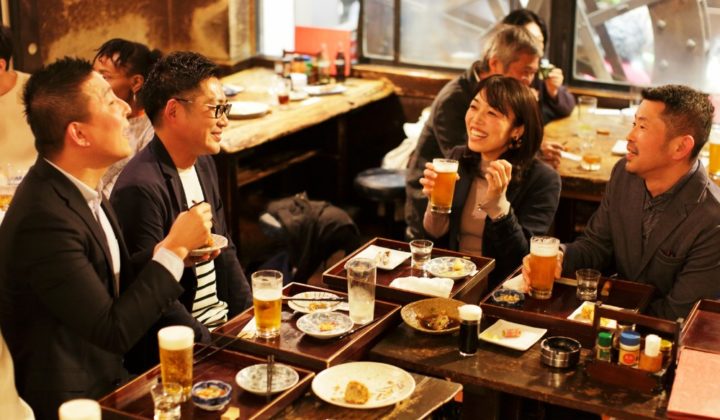
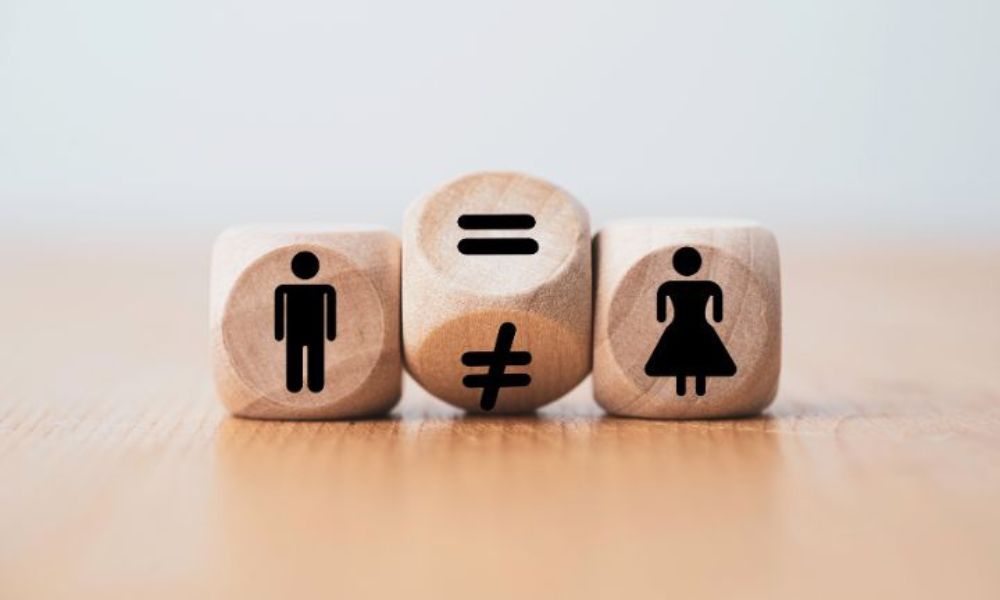
Despite being one of the most developed countries in the world, Japan is rated relatively low in the Gender Gap Index created by the World Economic Forum. It was ranked 118th out of 146 in 2024, signifying the relevant problem of gender inequality in political and economic fields.
Necessity of Addressing the Gender Inequality

Image credits: Canva.com
Japan’s deep-rooted problem of gender inequality has a long history and direct connections to family values and religion. It makes this problem urgent but almost impossible to fight. However, as the fifth goal of the Sustainable Development Goals introduced by the United Nations, Gender Equality is a necessary foundation for a peaceful and sustainable world. All governments need to understand it and effectively address the problem, but today, you will learn more about Japanese Governmental Initiatives in strengthening women’s rights.
Governmental Initiatives in Fighting Gender Inequality

Image credits: Canva.com
Here are some government initiatives introduced by the Japanese government in reducing the gender gap. All of them have been implemented or are currently being implemented. Even if their results are not the most significant, knowing about these initiatives is very important for the future promotion of gender equality.
Basic Law for a Gender-Equal Society (1999)
This law aims to promote a gender-equal society in a clear and organized way. It sets out five key principles, such as respect for the human rights of men and women, consideration of social systems or practices, joint participation in planning and deciding policies, and so on. It also defines the responsibilities of the government, local authorities, and citizens. Later on, this law became a base for future policies and initiatives to address gender inequality in Japan.
Basic Plan for Gender Equality (2005)
This plan consists of three parts: basic philosophy, structure, and highlights; 12 priority fields; and necessary strategies to implement the ideas. The 12 priority fields cover a variety of spheres, including employment, decision-making processes, family, Health, education, and so on. The strategies focus on the aims of this plan and show useful statistics for comparison. For example, in the field of Health, the objective is to increase the participation of women in sports to 50% by 2010, while in 2004, the percentage was only 38.5%.
Four-Day Workweek Initiative (2025)
The Governor of Tokyo, Yuriko Koike, in support of women in careers, announced the plan to make a four-day workweek available to metropolitan government workers. This initiative is part of a “Women in Action” project that supports and increases women’s leadership. According to Koike, women can have three days off weekly to focus on their children without giving up on careers.
Development Strategy for Gender Equality and Women’s Empowerment (2016)
Japan recognizes the importance of developing women’s participation in all spheres, so creating this framework was inevitable. Its basic principles are “Promotion of Women’s Rights,” “Building the Capacity of Women and Girls to Reach Their Full Potential,” and “Advancement of Leadership.”
Women, Peace, and Security (WPS) Agenda
The United Nations introduced this agenda in 2000. It is important because it considers gender inequality at the level of world peace, saying that without gender equality, there will be no peace.
Japan’s implementation of the WPS agenda contains three editions, targeted at different periods, the latest one in 2023-2028. Interestingly, the Japanese action plan significantly differs—it includes an additional section, “Disaster Risk Reduction, Disaster Response, and Response to Climate Change.” The reason behind such a decision is the frequency of natural disasters in Japan.
Future of Gender Inequality in Japan

Image credits: Canva.com
Japan’s struggle with gender inequality remains an important challenge. Despite ongoing efforts to address this problem, the country has not shown significant results yet. The Japanese government has introduced multiple initiatives, such as the Basic Plan for Gender Equality and the Four-Day Workweek Initiative, to decrease the gender gap in different spheres. However, policies are not enough. The main solution is that societal attitudes towards gender roles should change to increase inclusivity and reduce gender inequality. Only then will Japan get closer to sustainable development.
Related Articles:
- Overcoming Japan’s Birth Rate Crisis
- Role of Women Throughout Japanese History
- A Critical Look into Japan’s Womenomics
Featured image credits: Canva.com